

Europol Operational Taskforce GRIMM continues to tackle online recruitment of young perpetrators in Europe
This person is the alleged driver of two minors who were responsible for a series of explosions in Hessen (Frankfurt am Main and Taunusstein) in July and August 2025, who have been arrested and held in pretrial detention since.
On the German side, the investigations in this case were conducted by the Frankfurt Police (Polizeipräsidium Frankfurt am Main) in cooperation with the Frankfurt Public Prosecutor's Office (Staatsanwaltschaft Frankfurt am Main), with the Federal Criminal Police Office (Bundeskriminalamt) providing support.
Background on Violence-as-a-Service
Violence-as-a-Service (VaaS) involves the outsourcing of violent acts to criminal service providers, who often recruit young individuals using online platforms.
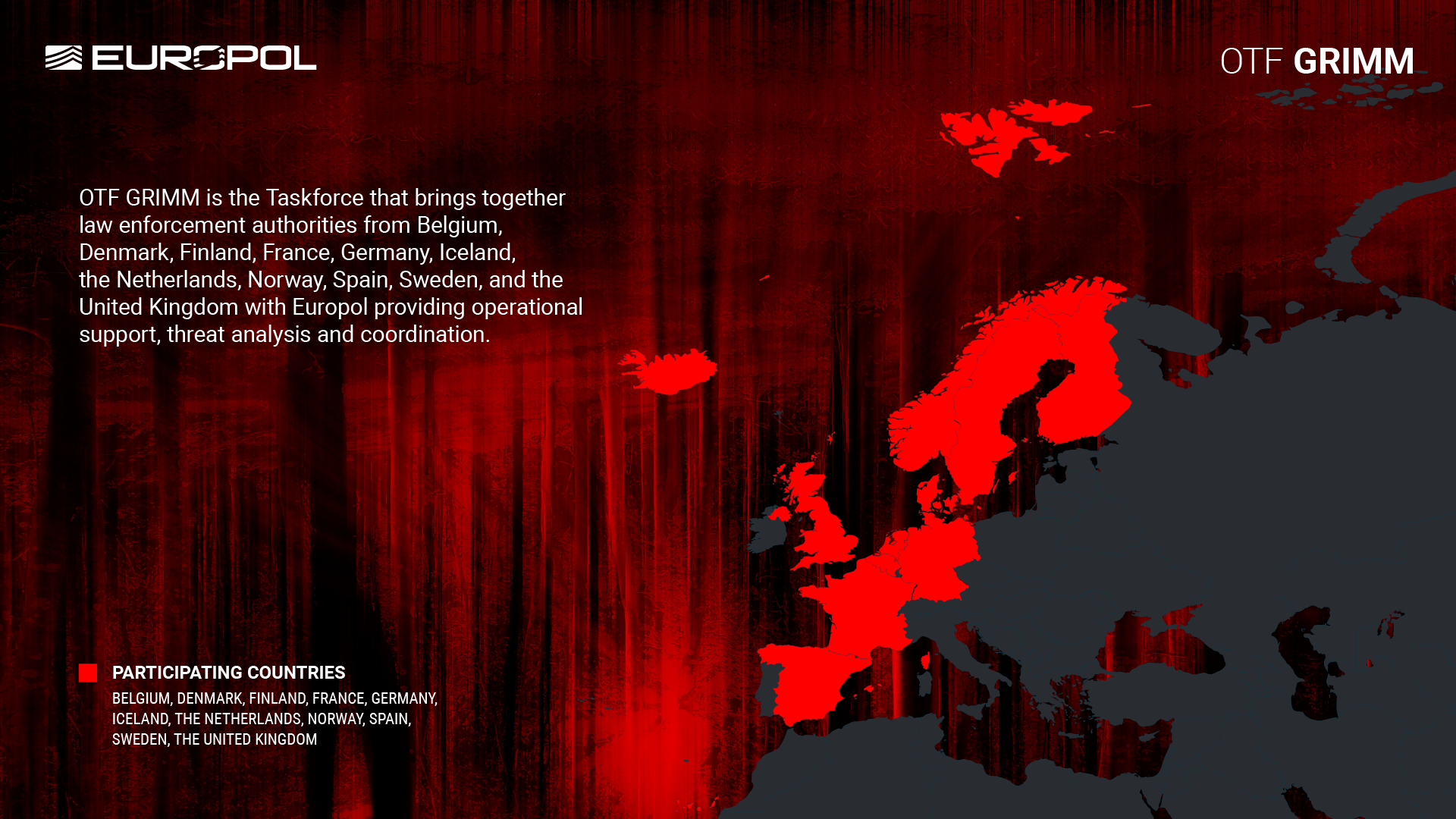
These young people, enticed by money, status, or a sense of belonging, are drawn into violent transnational criminal schemes. To combat this trend, the Operational Taskforce (OTF) GRIMM, composed of eleven European countries, facilitates international cooperation among law enforcement agencies.
The taskforce aims to share intelligence, map VaaS networks, dismantle criminal service providers, and collaborate with tech companies to prevent online recruitment, ensuring a coordinated European response to VaaS and the exploitation of young perpetrators.
Operational Taskforce GRIMM
Tackling violence-as-a-service and the recruitment of young perpetrators into serious and organised crimes.
Key figures from the first six months of OTF GRIMM (December 2025)
- 63 perpetrators arrested, directly preventing violent crimes
- 40 enablers apprehended, halting their facilitation of violence-for-hire services
- 84 recruiters detained, obstructing efforts to exploit vulnerable young people
- 6 instigators arrested, including 5 High Value Targets
Background
Violence-as-a-service (VaaS) refers to the outsourcing of violent acts to criminal service providers — often involving the use of young perpetrators to carry out threats, assaults, or killings for a fee.
Young people are being deliberately targeted and recruited to commit a wide range of crimes, from drug trafficking and cyber-attacks to online fraud and violent extortion. The recruitment process is highly strategic and usually carried out in four stages:

1. Instigator
The person who orders and finances the crime, usually located abroad.

2. Recruiter
The person who recruits potential perpetrators, usually via encrypted messaging apps or gaming/chat platforms.

3. Enabler
The person who provides the conditions to carry out the act, such as logistics, tools, contacts and financial arrangements.

4. Perpetrator
The person who commits the crime, usually an inexperienced minor without a connection to a criminal group or the recruiters.
Social media platforms and messaging apps are used to reach young people through coded language, memes and gamified tasks. In return for money, status or a sense of belonging, they are drawn into criminal schemes that are both violent and transnational.
Objectives
Operational Taskforce (OTF) GRIMM is an ongoing effort among international law enforcement agencies aimed at tackling the rising trend of violence-as-a-service and the recruitment of young perpetrators into serious and organised crime.

The taskforce, originally led by Swedish police, provides a platform for data analysis, operational coordination, and joint investigations — ensuring that law enforcement across Europe is aligned in tracking, investigating and disrupting VaaS networks. Its main objectives include:
- Coordinating intelligence sharing and joint investigations across borders.
- Mapping the roles, recruitment methods and monetisation strategies used by VaaS networks.
- Identifying and dismantle the criminal service providers enabling violence-on-demand.
- Cooperating with the tech companies in order to detect and prevent the recruitment on social media.


No comments:
Post a Comment