Project Safe Childhood is a nationwide initiative to combat the growing epidemic of child sexual exploitation and abuse launched in May 2006 by the Department of Justice. Led by the U.S. Attorneys' Offices and the Criminal Division's Child Exploitation and Obscenity Section (CEOS), Project Safe Childhood marshals federal, state and local resources to better locate, apprehend and prosecute individuals who exploit children via the Internet, as well as to identify and rescue victims.
As we navigate the middle of 2026, the digital landscape has evolved rapidly, bringing unprecedented challenges to the fight against online child sexual abuse material (CSAM). The most significant development in recent years is the proliferation of AI-generated CSAM—content created or altered using sophisticated generative AI tools. This technology has not only complicated detection and enforcement but has also introduced profound new dimensions of trauma for victims.
This blog entry provides an updated assessment of this growing threat, the corresponding surge in law enforcement initiatives, the resulting bipartisan legislative action, and the organizations leading the charge to protect the world's children.
The New Frontier of CSAM: AI Generation
The landscape has changed dramatically since the early 2020s. While traditional CSAM (capturing real-world abuse) remains a primary concern, AI-generated content has exploded. This category now includes:
Entirely Synthetic CSAM: Realistic depictions of children created by AI models trained on vast datasets, including, tragically, existing CSAM.
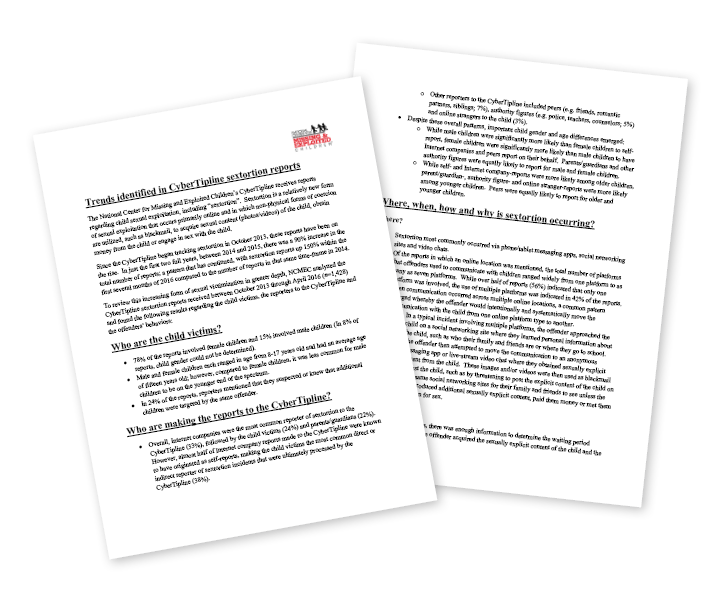
"Deepfake" CSAM: Altering existing content to place real children’s likenesses onto abusive scenarios. This is frequently used for online harassment and extortion, known as sextortion.
This evolution presents unique challenges. Unlike traditional CSAM, synthetic material can be generated in unlimited quantities on consumer-grade hardware. It tests the boundaries of existing visual hash-based detection systems and often exists in a complex legal area regarding creation versus possession.
Law Enforcement’s Tech-Forward Response
Law enforcement agencies globally have shifted their strategies to address this AI threat. Investigative units are no longer just looking for stored digital files; they are dismantling the infrastructure supporting the creation and dissemination of synthetic abuse material.
Specialized units, such as the FBI’s Crimes Against Children (CAC) task forces and Europol's European Cybercrime Centre (EC3), have increasingly adopted AI themselves—using it to automate the detection of new synthetic content and to trace the "digital fingerprints" of specific generative models. Forensic teams utilize high-tech mobile workstations and dedicated labs to track digital exploitation across encrypted networks.
Bipartisan Legislative Action: New Laws for a New Threat
One of the few areas to maintain strong, consistent bipartisan support in 2026 is the protection of children online. Recognizing that existing statutes drafted in the early internet era were insufficient for the AI age, legislatures around the world have passed sweeping new laws. This push for safety has successfully united lawmakers across opposing political spectrums, driving collaborative policy and swift legislative changes.
Key Legislative Shifts in 2026:
Explicit Criminalization: New laws explicitly classify the generation and distribution of AI-generated CSAM (including deepfakes of real minors) as felonies, independent of whether a real child was physically abused in the specific creation of that image.
Platform Accountability: Stronger 'duty of care' regulations hold technology platforms accountable for failing to prevent their generative AI tools from being used to create CSAM, and for failing to expeditiously remove such content.
Mandatory Reporting: Updated laws have expanded mandatory reporting requirements for AI service providers who detect CSAM being generated using their systems.
The Mental and Emotional Health Toll
It is critical that we always ground these discussions in the human cost. The victim of CSAM—whether real or deepfaked—suffers profound harm. We are seeing a measurable increase in acute emotional distress directly linked to the AI threat.
For real children whose images are used for deepfakes, the trauma is unique. They describe a terrifying loss of agency, knowing their likeness can be manipulated and distributed infinitely. The emotional health of these children often shows:
Skyrocketing Anxieties: A constant fear of detection, social ostracization, and future blackmail.
Deep Depression: Feelings of helplessness and worthlessness, particularly when AI content cannot be fully erased from the internet.
PTSD Symptoms: Flashbacks and severe emotional reactivity to digital environments.
A synthetic image can create very real devastation. The mental health support systems available to these victims are under significant strain and must be expanded.
Key Organizations Combatting the Attack
We must highlight the vital organizations that provide infrastructure, advocacy, and direct support to both law enforcement and victims. Their work is the backbone of the global response.
Internet Watch Foundation (IWF): Based in the UK, the IWF operates a global hotline for reporting CSAM, working directly with the internet industry to remove content.
NCMEC (National Center for Missing & Exploited Children): Based in the US, NCMEC operates the CyberTipline, the centralized reporting mechanism for CSAM. They process millions of tips, analyze content, and assist law enforcement globally.
ICMEC (International Centre for Missing & Exploited Children): ICMEC works across borders to advocate for better laws, train law enforcement, and build capacity to fight child exploitation worldwide.
Contact Information: Reporting CSAM and Seeking Help
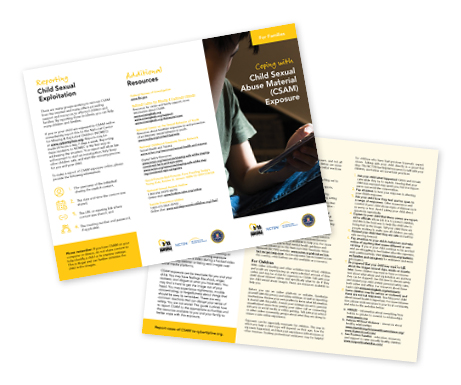
If you encounter CSAM, have information about child exploitation, or if you or someone you know needs help, please use the contacts below. Do not download, save, or share any suspected CSAM; report the link immediately.
Immigration and Customs Enforcement (ICE) HSI Tip Line:
Phone: 1-866-DHS-2-ICE (1-866-347-2423)
Victim Support & Mental Health (United States):
Crisis Text Line: Text HOME to 741741
988 Suicide & Crisis Lifeline: Call or text 988
The fight against AI-generated CSAM requires global collaboration, technical innovation, strong laws, and a compassionate focus on the survivors. The updated framework of 2026 provides powerful new tools, but vigilance remains essential.
Every single day, law enforcement agencies, cyber analysts, and non-profit organizations work quietly behind the scenes to pull children out of situations of abuse, trafficking, and severe exploitation. While much of this work remains confidential to protect the identities of minor victims, May and June 2026 marked the public conclusion of several massive, highly coordinated multi-agency operations.
From localized county sweeps to nationwide federal crackdowns, here is an in-depth breakdown of the latest child rescue missions, the agencies involved, and the resources deployed to bring these children to safety.
1. Operation Iron Pursuit (Federal Nationwide Takedown)
Timeline: April 1 – April 30, 2026 (Results finalized and public updates released mid-May 2026) Scope: United States (All 56 FBI Field Offices)
Led by the FBI’s Criminal Division—specifically the Violent Crimes Against Children and Human Trafficking Section—Operation Iron Pursuit was an intense, month-long enforcement sprint designed to track down child exploitation predators and locate missing or endangered minors.
The Impact:
Child Victims Located/Rescued: Over 200 children
Predators Arrested: More than 350 individuals
Offenses Targeted: Human trafficking, kidnapping, physical abuse, and the production/distribution of Child Sexual Abuse Material (CSAM).
Key Rescue Details:
The operation utilized localized strategies tailored by individual field offices. For example, the FBI Philadelphia Division targeted interstate predators, resulting in 13 arrests and the immediate recovery of six children. In a highly sensitive cross-border recovery, the FBI's Victim Services Division (VSD) successfully located a 10-year-old child from Utah who had been illicitly flown from Canada to Mexico, and ultimately to Cuba, safely returning the child to their biological mother.
Agencies & Partners Involved:
Federal Bureau of Investigation (FBI)
U.S. Department of Justice (DOJ)
FBI Victim Services Division (VSD): Provided crisis stabilization, forensic interviews, and direct mental health referrals.
National Center for Missing & Exploited Children (NCMEC)
Timeline: Concluded week of May 25, 2026 (Official release May 29, 2026) Scope: Regional Sweep (Lee, Collier, and Hendry Counties, Florida)
Run out of a centralized, confidential command center in Estero, Florida, this tactical deployment focused strictly on endangered missing youth who were highly vulnerable to human trafficking and street-level exploitation.
The Impact:
Endangered Children Located Safely: 21 children
Key Rescue Details:
Because runaways and youth in unstable living environments often rely on predators for basic survival needs, this operation did not stop at law enforcement recovery. The mission directly embedded trauma-informed advocacy groups into the command structure to ensure children were immediately provided with clothes, hygiene kits, and safe housing.
Agencies & Partners Involved:
National Child Protection Task Force (NCPTF): Coordinated intelligence and advanced data tracking.
Collier County Sheriff's Office
Operation Light Shine (INTERCEPT Task Force)
Florida Department of Juvenile Justice
Non-Profit Benefactors: Generously funded and supported by the Tim Tebow Foundation and The Jensen Project.
Community Support:A.N.A.’s Friends and Beverly’s Angels (provided post-recovery physical resources).
3. Operation Volcano (Regional Cyber & Task Force Sweep)
Timeline: Finalized May 11, 2026 Scope: Riverside County, California
Operation Volcano was a massive, year-long digital triage and physical raid operation that culminated in May 2026. Investigators tracked peer-to-peer networks to cross-reference over 500 unique IP addresses distributing exploitative materials locally.
The Impact:
High-Risk Offenders Arrested: 42 individuals
Networks Dismantled: Multiple regional peer-to-peer networks mapped out to protect local minors.
Key Rescue Details:
Task forces served 46 residential search warrants. The operation was strictly prioritized to identify offenders in positions of public trust or those with direct access to youth. Among those arrested were a child psychologist, a local IT employee for a state prison, and an individual wanted on a $2 million child sexual assault warrant.
Agencies & Partners Involved:
Riverside County Child Exploitation Team (RCCET)
Our Rescue: Provided specialized cyber-intelligence and operational funding.
FBI Inland Regional Child Exploitation and Human Trafficking Task Force
Local Police Departments: Beaumont, Blythe, Desert Hot Springs, Indio, Menifee, Murrieta, and Riverside PD.
Summary of the May-June 2026 Surge
Operation Name
Geographic Scope
Child Victims Recovered
Key Focus Area
Operation Iron Pursuit
Nationwide (U.S.)
200+
Interstate trafficking, kidnapping, and production networks
Southwest Florida Sweep
Regional (FL)
21
High-risk runaways and endangered missing youth
Operation Volcano
Localized (CA)
Network Disruption
Eliminating predators in positions of public trust / P2P digital networks
How to Help & Official Resource Links
Child safety relies entirely on community vigilance. If you see something suspicious or suspect a child is in danger, use these official, verified resources to make a report:
National Center for Missing & Exploited Children (NCMEC): Report anonymous tips 24/7 at missingkids.org or call 1-800-THE-LOST (1-800-843-5678).
FBI Tip Line: Submit digital evidence or suspect information directly to federal investigators at tips.fbi.gov or call 1-800-CALL-FBI.
National Child Protection Task Force: Learn about multi-agency rescue strategies and supporting local law enforcement intelligence at ncptf.org.
Our Rescue: Review global field operations, ESD K9 training initiatives, and community advocacy resources at ourrescue.org.
In a powerful, coordinated response to one of the most serious threats facing our communities, law enforcement agencies across North Texas recently concluded Operation Soteria Shield. This massive, multi-agency initiative, led by the FBI Dallas Division and the North Texas Internet Crimes Against Children (ICAC) Task Force, specifically targeted the digital pipelines of online child sexual exploitation.
What was Operation Soteria Shield?
Operation Soteria Shield was not a single raid, but a sustained, intelligence-driven surge designed to identify predators, rescue victims, and disrupt the networks that facilitate the online exploitation of children. Named after the Greek goddess of safety and deliverance, the operation reflects the core mission of the participating agencies.
This initiative prioritized a proactive approach, utilizing advanced cyber investigative techniques and forensic analysis to track illicit activity across the internet, including the dark web.
The Power of Collaboration
The success of Operation Soteria Shield hinged entirely on unprecedented collaboration. It brought together the specialized expertise of federal agents, state investigators, local police departments, and prosecutors.
The FBI Dallas Division provided critical resources, including its Child Exploitation and Human Trafficking Task Forces and cyber capabilities. The North Texas ICAC Task Force, which is housed within the Dallas Police Department and comprises numerous local partner agencies, offered invaluable ground-level intelligence and community connections.
By pooling resources, sharing intelligence in real-time, and coordinating efforts, the multi-agency coalition was able to cast a much wider net and achieve significantly greater impact than any single agency operating in isolation.
Impact and Outcomes
While specific operational details and final numbers often remain sensitive during ongoing investigations, operations of this magnitude typically result in:
The Rescue of Victims: The foremost priority is always identifying and securing the safety of children being victimized.
Numerous Arrests: Predators targeting children online are identified, investigated, and facing serious federal and state charges.
Seizure of Evidence: Digital devices, computers, and servers containing exploitative material are seized for forensic analysis, strengthening prosecutions and identifying further networks.
A Strong Deterrent Message: Operations like Soteria Shield send a clear warning to potential offenders that law enforcement is actively working, interconnected, and dedicated to finding them.
The Ongoing Fight
Operation Soteria Shield represents a significant victory, but it is also a stark reminder of the persistent and evolving threat posed by online child exploitation. Criminals continuously adapt their methods, making the specialized, technological, and collaborative approach demonstrated in North Texas more critical than ever.
The dedication of the men and women of the FBI, the North Texas ICAC Task Force, and all participating law enforcement partners remains unwavering. Their commitment to protecting the most vulnerable members of our society—our children—ensures that initiatives like Operation Soteria Shield will continue to dismantle exploitation networks and deliver justice.
References and Resources
If you have information regarding the online exploitation of children, please contact your local law enforcement agency or submit a tip to the FBI at https://tips.fbi.gov/ or the National Center for Missing & Exploited Children (NCMEC) at 1-800-THE-LOST.
For more information on the agencies and initiatives mentioned in this article, please visit:
FBI Dallas Division Official Website: [Insert Link to FBI Dallas Division Page]
North Texas Internet Crimes Against Children (ICAC) Task Force: [Insert Link to North Texas ICAC Page]
FBI Crimes Against Children program: [Insert Link to FBI CAC Page]
Below are images detailing the scale and operational focus of law enforcement during Operation Soteria Shield.
Image 1: FBI Command and Coordination
Caption:Inside the Joint Operations Center (JOC) at the FBI Dallas Division, Special Agents and analysts manage intelligence and coordinate logistics for Operation Soteria Shield. The command post provided real-time support to the field teams across North Texas.
Image 2: Multi-Agency Response
Caption: Law enforcement officers, representing a multi-agency coalition including the FBI and the North Texas ICAC Task Force, execute a tactical entry during a critical phase of Operation Soteria Shield. The operation utilized coordinated efforts to apprehend targets across the region.
In a massive victory for child safety, the U.S. Attorney's Office for the Western District of Michigan announced a combined 984-month (82-year) prison sentence for two men involved in a calculated online child exploitation conspiracy.
Chief U.S. District Judge Hala Jarbou described the misconduct as so severe it was “off the charts.”
The Defendants and Their Sentences
The two co-conspirators received decades behind bars for their agreement to exploit minor girls:
Joseph Brandon (50, of Knoxville, TN): Sentenced to 660 months (55 years) in prison. The court ordered each of his individual sentences to be served consecutively due to the severity of his crimes. He will face 10 years of supervised release upon completion.
Michael David Bledsoe (47, of Lansing, MI): Sentenced to 324 months (27 years) in prison, followed by 5 years of supervised release.
Anatomy of the Conspiracy
Bledsoe and Brandon originally met online via a chat group dedicated to discussing the predation of minor girls. They moved to private messages to form a highly targeted criminal pact:
Sourcing the Targets: Bledsoe agreed to gather and provide social media accounts and specific biographical information about minor girls living in Michigan.
The "Catfishing" Scheme: In exchange, Brandon used that data to target the girls. He operated a fraudulent social media account posing as a 15-year-old girl to manipulate the victims and "catfish" child pornography from them.
How the FBI Exposed the Scheme
The complex operation unraveled through coordinated federal law enforcement efforts:
Initial Raid: Federal agents executed a search warrant on Bledsoe's Lansing home and electronic devices, discovering the illicit message logs and a trove of child exploitation material.
Multi-State Trace: Investigators used evidence from Bledsoe's devices to secure a second search warrant for Brandon's home in Tennessee. There, agents uncovered thousands of additional images and videos of child abuse.
The investigation was spearheaded by the FBI Lansing and Knoxville Resident Agencies, and the case was prosecuted by Assistant U.S. Attorney Austin J. Hakes.
“I don’t know how to make it any plainer than this: If you are sexually exploiting children, you will be found, prosecuted and sent to prison for a very long time. Stop harming our children or your life is essentially over.”
— Timothy VerHey, U.S. Attorney for the Western District of Michigan
About Project Safe Childhood
This prosecution is part of Project Safe Childhood, a nationwide Department of Justice initiative launched in May 2006. Led by U.S. Attorneys’ Offices and the Criminal Division's Child Exploitation and Obscenity Section (CEOS), the initiative marshals federal, state, and local law enforcement resources to locate, apprehend, and prosecute online predators while rescuing vulnerable victims.
To learn more about these ongoing enforcement efforts, visit Justice.gov/PSC.
How to Report Suspected Abuse
Combating online child sexual exploitation requires community vigilance. If you suspect or witness instances of online grooming, catfishing, or abuse, you can report it immediately through the following secure channels:
NCMEC CyberTipLine: Submit a report online at report.cybertip.org or call the 24-hour hotline at 1-800-843-5678.
FBI Tips: Submit information directly to federal investigators at tips.fbi.gov.
At Trinity Mount Ministries, we believe that protecting the most vulnerable among us is one of our highest priorities. Today, we want to pause and bring attention to a monumental victory in the fight against child exploitation—a victory that means more than 200 children are waking up safe today.
On May 15, the FBI announced the results of "Operation Iron Pursuit," a month-long, nationwide sprint targeting alleged child exploitation predators across the United States. The results of this massive, coordinated effort are both sobering and incredibly inspiring:
Over 200 child victims have been identified and rescued.
More than 350 suspected predators have been arrested.
Focusing on the Rescue
While the statistics of the arrests highlight the scale of the problem, our hearts are entirely focused on the 200+ children who have been removed from dangerous, abusive situations. Every single number represents a real child with a name, a face, and a future that has now been given back to them.
Rescue is just the first step. These children now begin the long, delicate process of trauma recovery and healing. They will need specialized care, safe environments, and the dedicated support of advocates to help them reclaim their lives and their childhoods.
Acknowledging the Protectors
We also want to extend our deepest gratitude to the men and women of the FBI, local law enforcement, and the allied task forces who worked tirelessly on Operation Iron Pursuit. The professionals who dedicate their lives to tracking down perpetrators and stepping into the darkest environments to pull children to safety are true heroes. Their month-long sprint has made communities across the country safer for all our kids.
How We Can Stand Together
As a community, hearing about the realities of child exploitation can be difficult, but we must use this news as a catalyst for awareness and action.
Stay Vigilant: Educate yourself on the signs of child abuse and exploitation, both online and in your local community.
Support Advocacy: Look for local organizations, trauma centers, and child advocacy groups that provide direct resources to rescued youth, and support their missions.
Protect the Vulnerable: Continue to foster safe, open environments for the children in your own lives to speak up if they ever feel unsafe.
We celebrate this incredible rescue, and we remain committed to standing together to ensure that every child has the opportunity to grow up in a safe, protective, and caring world.
Project Safe Childhood is a nationwide initiative to combat the growing epidemic of child sexual exploitation and abuse launched in May 2006 by the Department of Justice. Led by the U.S. Attorneys' Offices and the Criminal Division's Child Exploitation and Obscenity Section (CEOS), Project Safe Childhood marshals federal, state and local resources to better locate, apprehend and prosecute individuals who exploit children via the Internet, as well as to identify and rescue victims.
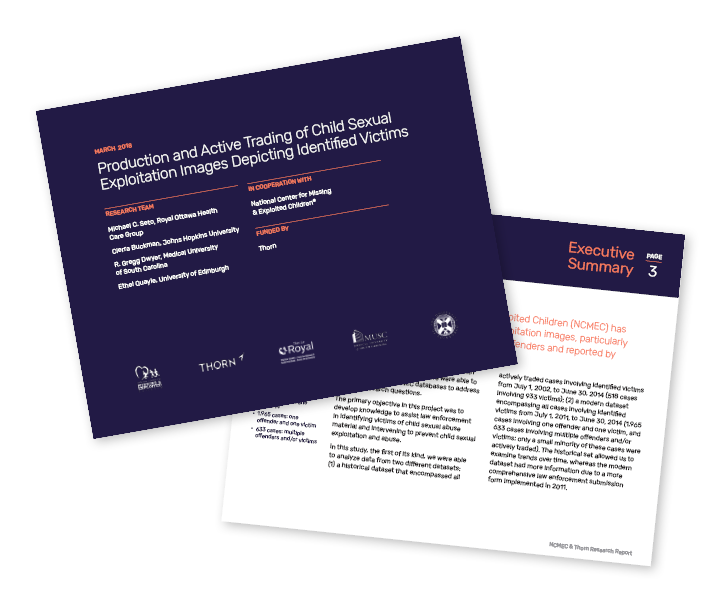
2024 marked 40 years of operation for the National Center for Missing & Exploited Children. Over the past four decades, NCMEC has continuously confronted evolving threats against children and worked with law enforcement, legislators, industry, survivors and their families and others to create and implement solutions to keep children safe online.
NCMEC's CyberTipline was created in 1998 to receive reports of suspected child sexual exploitation from the public and electronic service providers (ESPs). Through this work, we support law enforcement efforts to stop child sexual exploitation and abuse and provide services to combat the harmful circulation of child sexual abuse material (CSAM).
This report includes data from reports made to the CyberTipline in 2024 and reflects the ever-changing nature of the threats against children and the landscape of online child protection.

CyberTipline Media Coverage Success StoriesDownload PDF
NCMEC’s CyberTipline is the nation’s centralized reporting system for the online exploitation of children. The public and electronic service providers can make reports of suspected online enticement of children for sexual acts, child sexual molestation, child sexual abuse material, child sex tourism, child sex trafficking, unsolicited obscene materials sent to a child, misleading domain names, and misleading words or digital images on the internet.
Every child deserves a safe childhood.
What Happens to Information in a CyberTip?
NCMEC staff review each tip and work to find a potential location for the incident reported so that it may be made available to the appropriate law-enforcement agency for possible investigation. We also use the information from our CyberTipline reports to help shape our prevention and safety messages.
Is Your Image Out There?
Get Support
One of the worst things about having an explicit image online is feeling like you’re facing everything alone. But you have people who care for you and want to help. Reach out to them!
A trusted adult can offer advice, help you report, and help you deal with other issues. It could be your mom, dad, an aunt, a school counselor, or anyone you trust and are comfortable talking to. You can also “self report” by making a report on your own to the CyberTipline.
Families of exploited children often feel alone in their struggle and overwhelmed by the issues affecting their lives. NCMEC provides assistance and support to victims and families such as crisis intervention and local counseling referrals to appropriate professionals. Additionally, NCMEC’s Team HOPE is a volunteer program that connects families to others who have experienced the crisis of a sexually exploited child.
Don't Give Up
Having a sexually exploitative image of yourself exposed online is a scary experience. It can make you feel vulnerable and isolated, but remember, others have been in the same situation as you – and they’ve overcome it. Learn the steps you can take to limit the spread of the content.
By the Numbers
In 2023, reports made to the CyberTipline rose more than 12% from the previous year, surpassing 36.2 million reports.
There were 105,653,162 data files reported to the CyberTipline in 2023.
Reports of online enticement increased by more than 300% from 44,155 in 2021 to 186,819 in 2023.
If you think you have seen a missing child, or suspect a child may be sexually exploited, contact the National Center for Missing & Exploited Children 24 hours a day, 7 days a week.
Report Child Sexual Exploitation
Use the CyberTipline to report child sexual exploitation.